The Roof Whisperer: Signs Your Roof Is Trying to Tell You Something
Most homeowners think about their roof exactly twice — the day it goes on, and the day it leaks. Everything in between, it's just up there. Quietly doing its job. But roofs are surprisingly chatty if you know how to listen — they send warning signs months, sometimes years, before a real problem shows up in your living room ceiling.
The Roof Whisperer: Signs Your Roof Is Trying to Tell You Something
Most homeowners think about their roof exactly twice — the day it goes on, and the day it leaks. Everything in between, it’s just up there. Quietly doing its job. But roofs are surprisingly chatty if you know how to listen — they send warning signs months, sometimes years, before a real problem shows up in your living room ceiling.
I’ve walked a lot of roofs over the years, and almost every “sudden” leak has a paper trail. Somebody just wasn’t reading it. So here’s what to actually look for.
Granules piling up in the gutter
Asphalt shingles are coated in a layer of tiny mineral granules — think of it as sunscreen for the roof, blocking UV rays from cooking the material underneath. As shingles age they shed a few granules naturally, no big deal. But if you clean your gutters and find a noticeable gritty buildup, especially right after a storm, that’s the shingles losing their protective layer faster than they should. It’s usually one of the first signs, and one of the easiest to miss because, well, who looks in their gutters for fun.
A ridge line that isn’t straight anymore
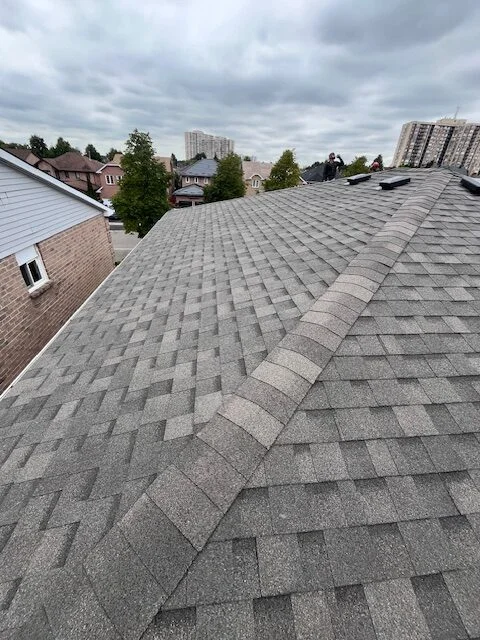
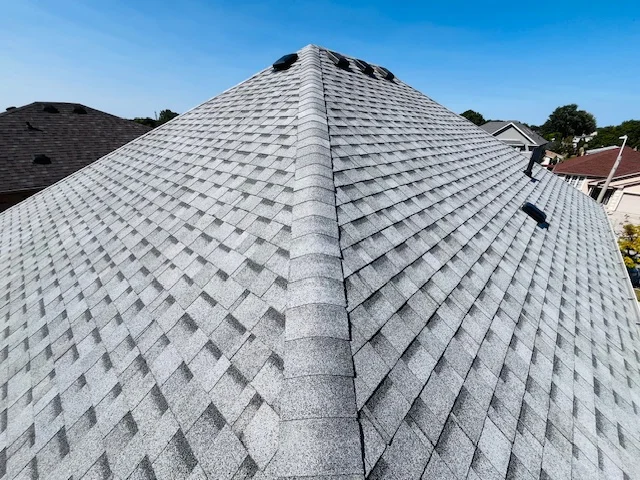
Walk to the far end of your driveway or across the street and look at the roofline — specifically the ridge, where the two slopes meet at the top. It should read as one clean, straight line against the sky. A dip or a wave in that line usually points to sagging somewhere underneath: water-damaged decking, aging trusses, sometimes both. It’s easy to miss because you’re looking up at your own roof every day and small changes just… blend in.
Daylight where there shouldn’t be any
Most people have never actually stood in their attic with the lights off. Try it on a sunny afternoon. If you see little pinpricks of light coming through the roof deck, that’s a gap — and if light can get through, so can water. You just haven’t had the storm that proves it yet.
Shingles curling at the edges
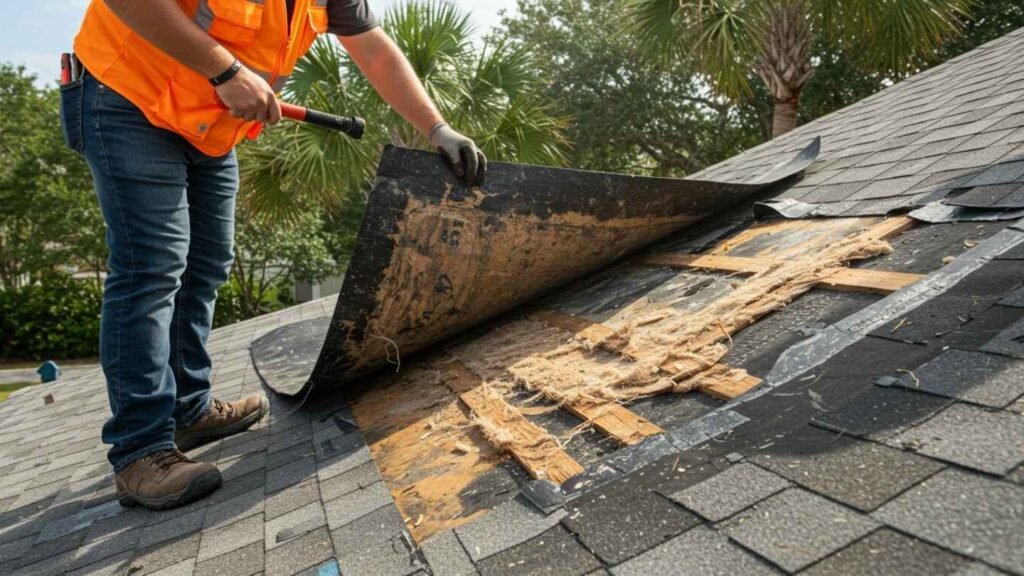
Shingles are supposed to lie flat. When the edges start curling up, or the middle starts to cup, it means they’ve dried out and lost their flexibility. Usually this shows up around the 15-20 year mark, though poor attic ventilation can speed things up considerably — basically baking the shingles from underneath.
Moss patches and dark streaking
That moss creeping across the shady side of your roof looks almost charming until you realize it’s trapping moisture right against the shingle surface, which speeds up decay. Dark streaks are a different thing — usually algae — and while they’re less of a structural threat, they’re often the first visible clue that the roof’s protective coating is thinning out.
Energy bills that crept up for no reason
This one’s easy to overlook because it doesn’t look like a roofing problem at all. But a roof with failing ventilation or insulation gaps can mess with how your whole house holds temperature. If your bills have been climbing and you can’t pin down why, put the roof on the suspect list along with the windows and insulation.
Little bumps where nails are backing out
Temperature swings over the years cause nails to slowly work themselves loose from the decking, and you’ll see it as small raised bumps under the shingle surface. Cosmetic at first glance — but each one is a future crack, and a future crack is a future leak.
Why roofs tend to fail quietly, then all at once
Here’s the thing nobody tells you when you buy a house: the day water actually shows up on your ceiling is rarely the start of the problem. It’s the last chapter of something that’s been building for a while, usually one or two of the signs above that nobody noticed. Roofs are built with backups — underlayment under the shingles, flashing at the joints, ventilation to manage moisture — so it typically takes several small failures stacking up before water actually gets inside.
Which is honestly good news. A walk around the house once or twice a year, plus the occasional peek in the attic, catches most of this stuff while it’s still a $300 fix instead of a $15,000 one.
Quick note on materials, since not all roofs age the same
Asphalt shingles — the default in most of North America, 20-30 years, wear shows up as granule loss and curling.
Metal roofing — can go 40-70 years, but keep an eye on loose seams and any scratched coating exposing bare metal to rust.
Clay or concrete tile — 50+ years is normal, though individual tiles crack and get swapped out rather than replacing the whole roof.
Wood shakes — great look, most maintenance of the bunch, needs regular treatment against rot and moss.
Slate — the marathon runner. A properly installed slate roof can outlive the house it’s on, sometimes by a century or more, though repairs need a specialist who actually knows slate.
Bottom line
Your roof doesn’t just fail one day out of nowhere — it whispers first. Granules in the gutter, a ridge that’s not quite straight, a stray bit of daylight where the attic should be dark. Catching those early is really the whole game. Not fancier materials, not a better contractor — just paying attention before the roof has to start shouting.
Le Ciel Roofers provides professional roof repair, roof replacement, shingle roofing, flat roofing , emergency roofing services across the Brampton and the GTA.





Le Ciel Roofers